

A Meta Quest 3 costs 550 euros. Or is it 2,150 euros? At first, it looks like a one-time hardware purchase. But when you look more closely, it is a subscription model with recurring costs. Since 2024, the largest VR manufacturers, Meta and Pico, require mandatory MDM subscriptions from business customers. This can get expensive.
What Has Changed? The MDM Revolution of 2024
Until early 2024, buying enterprise VR headsets worked like any other hardware purchase: you paid once, the device was yours, and that was it. Companies could manage their Meta Quest headsets free of charge through mobile device management (MDM), or not use MDM at all.
This has changed completely. Meta introduced Meta Horizon Managed Services (MHMS) in February 2025 (firmware v74). Since then, MDM is mandatory for all new Meta Quest enterprise devices. Without an active MHMS subscription, you can no longer use a new Quest headset in a business context.
What Is MDM and Why Is It Now Mandatory?
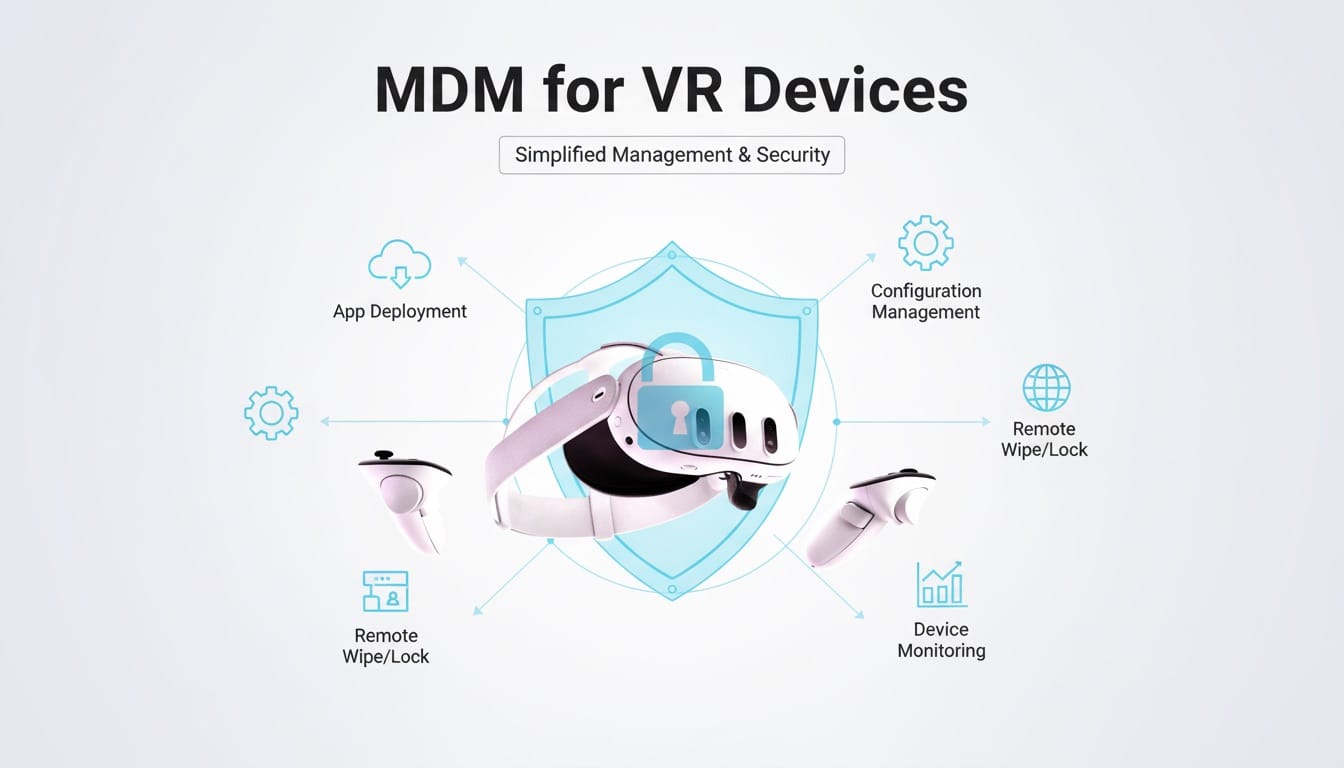
MDM (mobile device management) is a software infrastructure for the central management of mobile devices. For VR, MDM lets you do these tasks:
- Device configuration: install apps remotely, manage settings
- Content distribution: distribute company content to multiple headsets
- Security control: lock devices, restrict access, ensure compliance
- Kiosk mode: limit devices to specific apps (for example, for booths)
- Shared mode: configure one headset for multiple users
Does this sound useful? It is, for companies with larger VR fleets. The problem: Meta now makes these functions mandatory and paid, whether you need them or not.
The True Costs: From 550 Euros to 2,150 Euros
Let us calculate the hidden costs with a concrete example. Assume that you buy a Meta Quest 3 Business Edition for your sales team:
Years 1-2: The Honeymoon Phase
| Hardware | Meta Quest 3 Business Edition €549 |
| MHMS (2 years included) | €0 |
| Total costs, years 1-2 | €549 |
The first two years are easy: the purchase price includes MHMS.
Years 3-5: The Bad Surprise
| MHMS subscription | $180/year × 3 years = $540 (~€500) |
| Third-party MDM | $84-120/year × 3 = $252-360 (~€230-330) |
| Total MDM costs, years 3-5 | €730-830 |
Total cost of ownership (5 years):
| Hardware | €549 |
| MHMS, years 3-5 | ~€500 |
| Third-party MDM, years 1-5 | ~€550 |
| Total costs over 5 years | €1,599 |
And this is per headset. For a fleet of 10 headsets, this means an additional 10,000 euros over five years. These are pure management costs. You do not produce a single piece of new content for this money.
An Even More Expensive Scenario: Shared Mode with ManageXR
For trade show use with multiple users per headset, many companies need extended MDM functions:
| MHMS Shared Mode | $288/year × 3 years = $864 (~€800) |
| ManageXR Enterprise | $120/year × 5 years = $600 (~€550) |
| Total costs over 5 years | ~€1,900 |
Suddenly, your 550-euro headset costs almost 2,500 euros over five years.
What You Really Get for These MDM Costs
Are these costs justified? Let us look at what MHMS and third-party MDM actually offer:
Meta Horizon Managed Services (MHMS): $180/year
What you get:
- Access to the MDM infrastructure (but not the MDM itself!)
- Shared mode (multiple users per headset)
- 3-year limited warranty
- Integration with third-party MDM is possible
What you do NOT get:
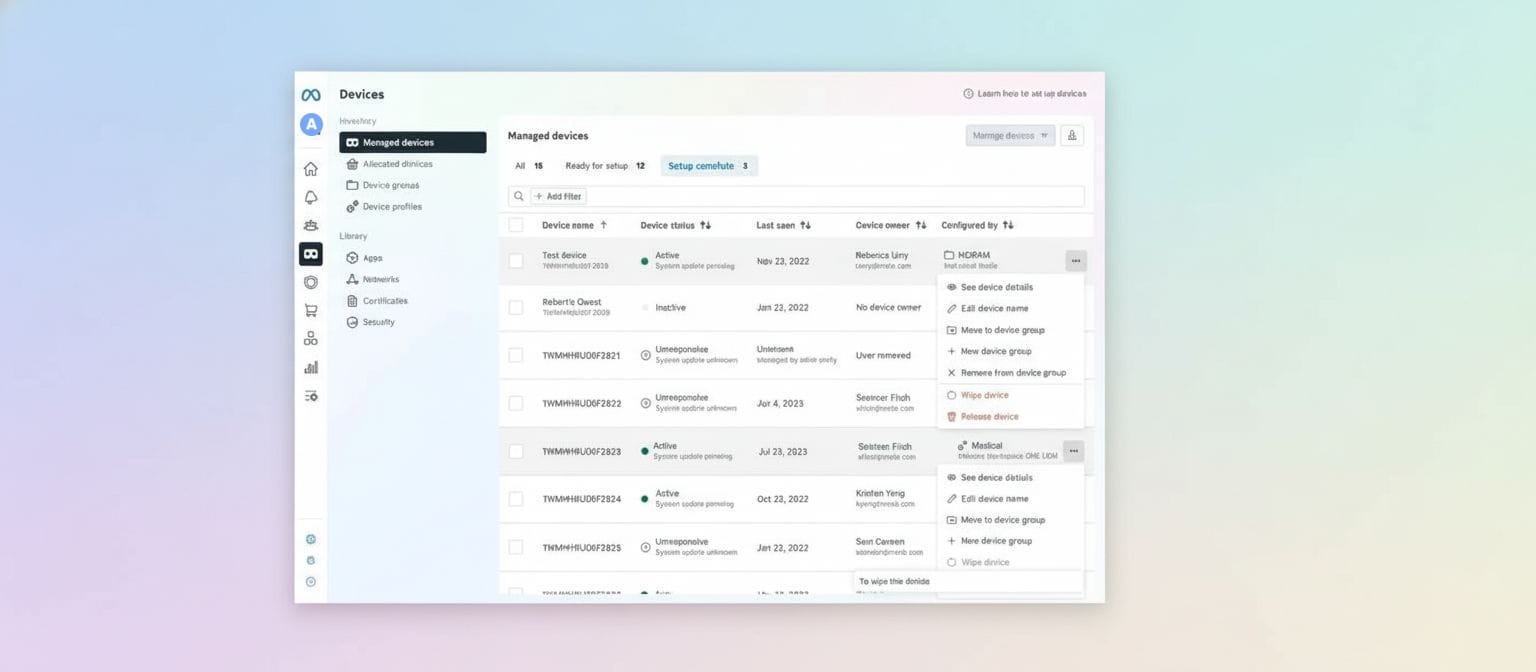
- No complete MDM system
- No content management functions
- No remote management without additional software
MHMS is only the access permission that lets you use a real MDM at all. For the actual device management, you also need a third-party MDM.
Third-Party MDM (ManageXR, ArborXR, etc.): $84-120/year
What you get:
- Remote installation of apps
- Content distribution to multiple devices
- Central management of configuration and settings
- Kiosk modes and app restrictions
- Analytics and usage statistics
What many SMEs really need:
- 3-5 VR headsets with the same app
- One-time configuration, with almost no changes after that
- Maybe 2-3 content updates per year
For this simple requirement, you pay $180 + $100 = $280 per year and headset, for software that you almost never use.
A Critical View: Why Make It Mandatory?
Let us ask the uncomfortable question: Is this mandatory MDM infrastructure technically necessary, or is it mainly driven by revenue?
The Smartphone Comparison
Nobody would accept it if Apple or Samsung charged mandatory MDM fees for iPads or Android tablets. Companies can easily use their tablets without MDM. Or they can choose to implement an MDM of their choice.
With VR headsets, the same Android-based hardware suddenly works only with a mandatory, paid MDM. A technical necessity? Unlikely. A new business model? Obviously.
The Subscription Trend: Hardware Becomes a Service Platform
Meta and other tech companies follow a clear strategy: recurring revenue from subscription models instead of one-time hardware sales. Software as a service (SaaS) is more profitable and more predictable than hardware margins.
The problem: VR headsets are physical devices that you own. But the mandatory software infrastructure turns your hardware purchase into a permanent dependency.
What Happens If You Do Not Pay?
The critical question: What happens after two years if you do not renew the MHMS subscription?
The answer is not clear, but the implications are worrying:
- Do you lose access to your own enterprise apps?
- Does the headset then work only as a consumer device?
- Can you access your own content that is already installed?
Meta does not communicate these worst-case scenarios transparently. This is a clear warning sign for industrial customers who must plan for the long term.
Hidden Costs Beyond the Subscriptions
The monthly MDM fees are only the tip of the iceberg. There are more hidden costs:
IT Integration Effort
You must configure, integrate and maintain MDM systems:
- Initial setup: 8-16 hours of IT work
- Integration with existing systems (Active Directory, SSO)
- Ongoing administration: approx. 2-4 hours/month
- Troubleshooting of connection problems
Cost estimate: €2,000-5,000 for setup + €500-1,000 for annual administration
Training Effort
Your IT team must understand and manage MDM systems:
- Training for IT administrators
- Documentation and internal processes
- Support for end users with MDM-related problems
Lock-In Risks
After you invest in Meta's MHMS ecosystem:
- A change to other VR platforms becomes more expensive
- Your processes are optimized for Meta infrastructure
- The sunk cost effect makes objective decisions more difficult
Pico: A Better Alternative?
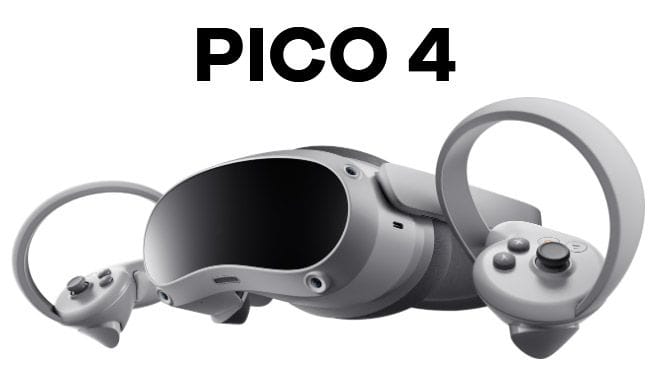
Pico, the second-largest standalone VR provider, uses a more customer-friendly approach:
Pico Business Device Manager
Costs: Currently a free 12-month trial for devices that are registered before June 1, 2025.
What happens after that? Pico has not yet announced long-term prices, but it signals the following:
- No mandatory subscription for basic business functions
- Third-party MDM works without an additional vendor fee
- More flexible license models
Comparison of total costs over 5 years (total cost of ownership):
| Cost type | Meta Quest 3 | Pico 4 Enterprise |
|---|---|---|
| Hardware | €549 | ~€699 |
| Vendor MDM (5 years) | ~€900 | ~€0-300 (not clear) |
| Third-party MDM | ~€550 | ~€550 |
| Total | ~€2,000 | ~€1,250-1,550 |
Savings per headset over 5 years: €450-750
For a fleet of 10 headsets: €4,500-7,500 in cost savings from the choice of vendor alone.
Apple Vision Pro: The Special Enterprise Path
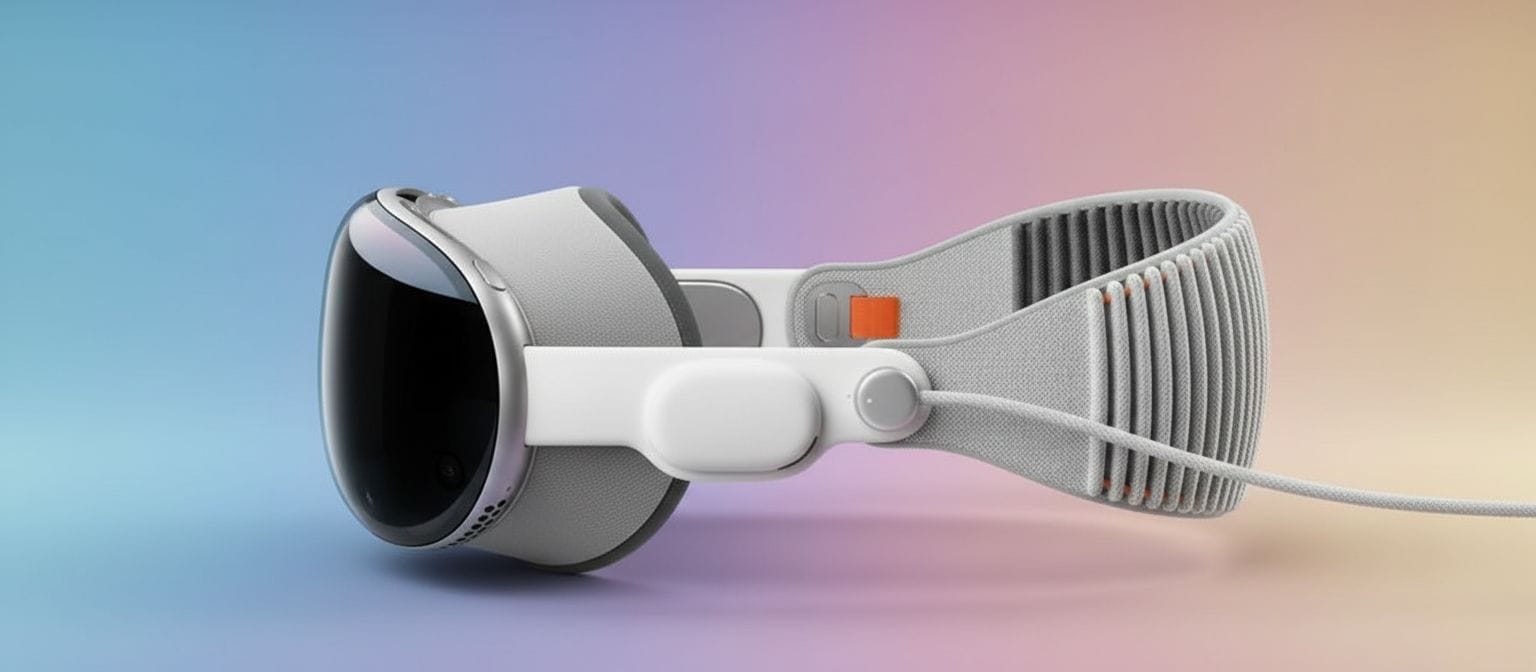
Apple uses a very different approach. Vision Pro uses the established Apple Business Manager ecosystem:
- No additional MDM subscriptions specifically for Vision Pro
- Standard MDM solutions (Jamf, Microsoft Intune, etc.) work as they do for iPads
- No vendor lock-in from a VR-specific management infrastructure
- Cost structure: hardware price + existing MDM costs (if any)
The problem: Vision Pro costs €3,999. Economically, it makes sense only for very specific high-end applications.
How Does This Affect Machine Builders? The Vuframe View
As a provider of VR solutions for machine builders, we see this development critically. More and more of our customers, from mid-sized companies to large corporations, ask us:
"Is VR still worth it with these hidden costs?"
Realistic Scenarios from Our Customers
Scenario 1: Sales team with 5 headsets
A mid-sized machine builder equips its sales team of 5 people with VR headsets for customer presentations.
| 5× Meta Quest 3 Business | €2,745 |
| Vuframe Spaces licenses (5 users) | individual |
| MDM costs, years 3-5 (5× $280/year) | ~€4,200 |
| Additional MDM costs over 5 years | €4,200 |
The MDM costs are more than 150% of the original hardware investment.
Scenario 2: Booth with 3 demo stations
A company uses 3 headsets permanently at its booth for product demonstrations.
| 3× Meta Quest 3 Business | €1,647 |
| Shared mode MDM, years 3-5 (3× $388/year) | ~€3,500 |
| Additional MDM costs over 5 years | €3,500 |
The MDM costs are more than 200% of the hardware costs.
Our Recommendations for Machine Builders
- Calculate precisely: calculate the TCO over 5 years, not only the hardware price
- Check Pico: significant savings are possible, especially for larger fleets
- Evaluate your MDM needs honestly: Do you really need central management, or is manual configuration sufficient?
- Negotiate: include vendor MDM costs in the negotiation when you order a fleet
- Exit strategy: What happens if you do not want to continue to pay in 3 years?
Alternatives and Workarounds
Option 1: Consumer devices in a business context (with limitations)
Some companies use consumer Quest headsets without the Business Edition. This saves MDM costs, but it has disadvantages:
- No central management
- You must configure each device manually
- No shared mode
- Against Meta's terms of use for commercial use
Option 2: Minimal MDM use
Configure the devices through MDM only initially, then use them offline:
- Reduces ongoing costs
- Works for stable applications (for example, a booth)
- Updates and changes are more complicated
Option 3: Vendor change to Pico
Especially for new investments, Pico is worth a look:
- Comparable hardware quality
- Much lower TCO
- More flexibility in the choice of MDM
Option 4: PC VR instead of standalone
For stationary applications (showroom, fixed demo stations):
- Higher-quality HTC or Pimax headsets without mandatory MDM
- Higher hardware costs, but no recurring vendor subscriptions
- Requires a PC, but gives more performance
Conclusion: Informed Decisions Despite Subscription Pressure
VR is a powerful technology for machine builders. Interactive product presentations, virtual booths and global sales support are proven to work very well. The success stories of our customers speak for themselves.
Three key findings:
1. Calculate realistically
With a serious calculation of the total cost of ownership, a 550-euro headset realistically costs €1,600-2,000 over five years. Plan your budget accordingly.
2. Question the obligation
Mandatory MDM subscriptions are not a technical necessity. They are a business model. Examine alternatives (Pico, PC VR) and negotiate.
3. Plan your exit strategy
What happens if you do not want to pay, or cannot pay, in three years? Answer this question before you buy, not after.
Our recommendation for new investments in 2025:
For companies with 1-3 headsets: Meta Quest 3 is still a good choice, despite the MDM costs. For small fleets, the hardware quality and the app ecosystem justify the extra cost.
For companies with 5+ headsets: seriously consider Pico 4 Enterprise. The MDM cost savings justify even slightly higher hardware prices. Total cost advantage over 5 years: €4,500-7,500 for 10 devices.
For stationary applications: evaluate PC VR solutions. No vendor MDM fees, higher performance and more future-proof.
The question that you should ask yourself:
"Do I pay for technology that moves my company forward, or do I finance the subscription business model of a hardware manufacturer?"
Let the answer guide your investment decision.
Do you plan VR investments and want a realistic estimate of the hidden costs? We give you independent advice on the choice of hardware, TCO calculation and the best use scenarios for VR solutions such as our Vuframe Spaces.